
You’re probably familiar with the rich subgenre of editorial cartoon art lampooning “fat-cat†bankers, whose status as public punching bags has only grown over the past several years as “mortgage-backed securities†entered the national vocabulary and the economy sputtered.
But bankers come in all shapes and sizes, and the fat-catting that goes on at a multinational bank on Wall Street bears little resemblance to the day-to-day operations at a community bank like Univest in Souderton, Pennsylvania, where Tim Swartley ’94 heads the retirement services division. At institutions like these, Swartley says, the mission is quite simple at heart: taking in customers’ money for safekeeping, then lending it back in the community to finance home purchases, business growth and other means to progress and prosperity. “My favorite part of the job is enabling others,†says John Beiler ’87, CEO of Park View Federal Credit Union in Harrisonburg, Virginia. “It is very rewarding to work for an institution that has helped many individuals who might otherwise have been overlooked by the broader financial industry.â€
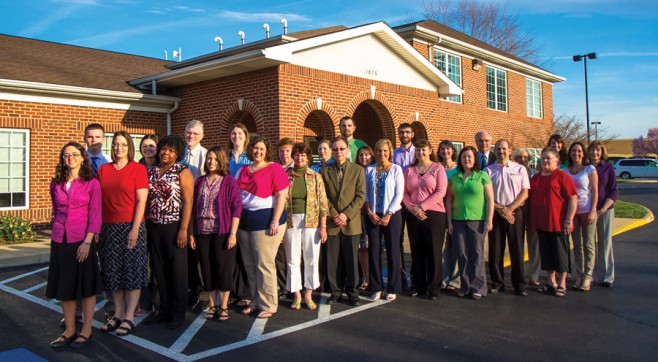
Serving Main Street folks
Because the credit union has a low-income service designation, Beiler says it can provide reasonable and affordable services to members who might otherwise pay high fees and interest rates elsewhere for financial services like check cashing, money orders and pay-day loans. “Financing a home is the largest financial transaction that most people undertake,†adds Jonathan Tieszen, MA ’03, a mortgage loan officer at Park View Federal Credit Union. Tieszen also said helping people realize some of their very practical and exciting goals, like buying a house for the first time or refinancing a mortgage to fund a home improvement project, is one of the most rewarding parts of his job. (This credit union was originally founded to serve 91´óÉń faculty and staff in 1969. It was run out of an office in the science center for nearly a decade; for a bit more detail, see story on math-oriented alumni who are in higher education, pp. 6-10.) Vickie Smith ’06, vice-president of human resources and mortgage services at Beacon Credit Union in Lynchburg, Virginia, feels a similar satisfaction when customers drive by to show her vehicles or invite her to visit homes that they’ve purchased with loans she’s helped them secure. “I’ve always enjoyed helping people,†says Smith, who worked for 18 years at a bank in Harrisonburg and previously served as CEO for three other credit unions in Virginia. Several alumni who work in banking note parallels between the Anabaptist emphasis on service stressed at 91´óÉń and the missions of the institutions where they now work.
Supporting the community
John T. Landes ’82, chief credit officer at Univest, says his job allows him to serve the community by providing financing that helps local businesses grow and employ more people, and by advising and helping commercial clients find solutions to financial and economic challenges. There are other, broader cultural similarities shared between 91´óÉń and Univest, where Bryce Bergey ’06 is vice president. An open Bible sits at the head of the boardroom table, and the bank’s directors open each of their meetings with devotions, a practice that might be viewed as odd in other bank boardrooms. And two of the bank’s five core values – “spirituality†and “community†– will sound familiar to anyone who’s ever spent time around 91´óÉń. While exploring job options after college, Swartley was encouraged by leaders at Univest to pursue a voluntary service term before beginning his career. He remained in contact with the bank and was hired there after his return to Pennsylvania, where he now enjoys the variety of his day-to-day encounters: retirement savings presentations, elementary school talks, budget planning, continuing education, and entertaining clients on the golf course, among other activities. “The core values of this organization are very similar to what we had growing up and at 91´óÉń,†says Landes. In addition to his work at Univest, Bergey also has opportunity to build on the global perspective emphasized at 91´óÉń through his position on the board of Mennonite Economic Development Associates. In this role, Bergey travels to Port-au-Prince, Haiti, four times a year to work on an economic development partnership with a large insurance provider there.
Being good stewards
Another 91´óÉń value that’s constantly on the minds of alumni who work for banks and credit unions is the concept of stewardship. While his technical title is “President/CEO,†Gerald Hershey ’82 prefers to describe himself as the “chief steward†at DuPont Community Credit Union, based in Waynesboro, Virginia. “I’m the guy that’s responsible to take care of the assets and culture of the organization,†says Hershey. “I’ve been entrusted to nurture and care for something that doesn’t belong to me. Stewardship is a value that was lived by my parents, taught by the church and certainly presented at 91´óÉń.†As the chief steward at the credit union, Hershey tries to popularize his employees’ understanding of stewardship by frequently discussing it, and even asks job candidates to define it as the final question in their interviews. A sense of stewardship also motivates Rod Yoder ’86, manager of the commercial credit department at Fulton Financial Corporation in Lancaster, Pennsylvania. As he reviews loan applications, Yoder says he makes decisions as if the money he is considering lending is his own – a strategy that checks any temptation to gamble on risky loans in hopes of turning a bigger profit. “The money we are lending comes from people who trust us with their hard-earned money,†says Yoder. “You need to ask yourself, ‘If the money I’m lending was coming straight from my personal savings account, would I still be willing to make this loan?’â€
Giving sound advice
At First Savings Bank in Perkasie, Pennsylvania, being a steward is close to the heart of Philip Rush ’82, who majored in Christian ministries at 91´óÉń. As a trust and investment officer, he advises clients who have trust accounts on their financial decisions. “In many cases, my clients are elderly or have special needs, and they need me to do my best for them to stretch their resources as far as possible,†says Rush. He adds that his conception of stewardship also applies to using his aptitude for numbers and finance to serve his church – it’s a way “to be a steward of the talents and resources that God has given me.†At PVFCU, Tieszen applies stewardship to his work by using his lending expertise to make sure that clients fully understand the implications of a loan they’re considering. “Just because you would be approved for [a specific] loan doesn’t mean that it’s the right thing to do,†says Tieszen. “Many times, people want to know if the financial transaction they are considering makes sense for them. If it clearly does not make sense, I’ll let them know.â€
tougher regulations
Despite the many distinctions between the 91´óÉń alumni working in banking and the fat-cats of popular caricature, the entire industry has had to deal with the fallout of the Great Recession and the tougher regulatory climate that’s ensued. “We brought it on ourselves, but it does put quite a burden on us,†says Yoder of Fulton Financial, who devotes significant time to preparing statements and reports for regulators. (First the bank checks the work, then a bank checker checks the bank’s work, and then a bank checker checker checks the bank checker’s work, Yoder says, adding that the new regulations do make his company stronger.) “It’s a tougher environment today than it was five years ago,†adds Landes, noting that the regulatory burden falls especially hard on smaller institutions, due to the amount of time required for compliance (and Univest’s $2.2 billion in assets puts it in the “small†category). At the same time, increased scrutiny on the industry has created opportunities for banks that have earned, rather than abused, the public’s trust. Beiler, for example, says PVFCU has grown recently, as people increasingly look for a financial institution they can trust.
Feeling called to banking
In a way, this comes as validation of a lesson from 91´óÉń that stands out in Beiler’s mind – the idea of “business as a calling†by which “one can use business as a means for creating good.†“91´óÉń professors taught that building trusting relationships and creating loyal customers was a business formula for success,†Beiler says. From a practical standpoint, Swartley (of Univest) remembers an internship opportunity with a brokerage in Harrisonburg as one of the most valuable parts of his 91´óÉń education. “That internship ‌ sparked my interest in investing and financial planning. I am grateful that I had that exposure as I was sorting out what I wanted to do with my degree,†he says. Yoder says that when he first took his job at Fulton Financial, the year after graduation, he was intimidated by the degrees his colleagues held from more prestigious schools. That soon wore off, though, once it was clear that he was capable of holding his own with them in the workplace – evidence of the fact that 91´óÉń prepared him well for the career. He also still sometimes carries (literally) with him a more tangible legacy of his education at 91´óÉń: a nondescript black briefcase he bought for $30 at the bookstore when he was a freshman. — Andrew Jenner ’04