
Jacqueline N. Font-Guzmán, executive director of diversity, equity and inclusion, offers a first-person perspective of why she was drawn to 91´óÉñ in the September 2021 education-themed issue of .
***
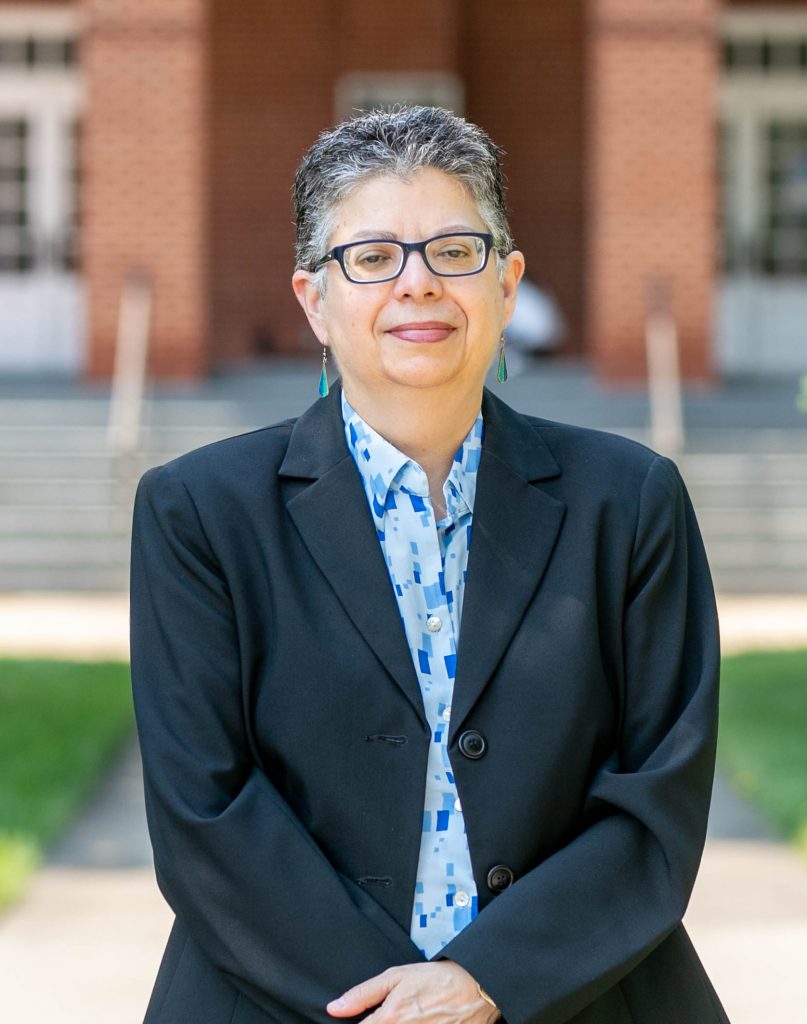
On a wall in my childhood home in Puerto Rico hung a framed quote by the Bengali writer Rabindranath Tagore. Today the same quote is pinned on the bulletin board in my office at 91´óÉñ:
I slept and dreamt that life was joy. I awoke and saw that life was service. I acted and — behold! — service was joy.
This quote embodies a guiding principle for me: I am called to serve others by including all voices and speaking truth to power.
This Christian imperative shapes my role at 91´óÉñ as executive director for diversity, equity and inclusion — the first person to hold this new position.
I am passionate about advancing DEI at 91´óÉñ because of its potential to break down barriers so that people can be their authentic selves and celebrate their shared humanity.
This Christian imperative shapes my role at 91´óÉñ as executive director for diversity, equity and inclusion — the first person to hold this new position.
I am passionate about advancing DEI at 91´óÉñ because of its potential to break down barriers so that people can be their authentic selves and celebrate their shared humanity.
I hope to guide the campus community to live more fully into its identity as a faith-informed peace and justice university and its commitment to cultivating a robust and inclusive community of learners.
In March, my husband and I relocated from Omaha, Neb., where I worked at Creighton University, to the stunning Shenandoah Valley of Virginia.
I was drawn to 91´óÉñ’s Anabaptist tradition to “follow Jesus’ call to bear witness to truth, serve with compassion and walk boldly in the way of nonviolence and peace.â€�
Similar institutional values attracted me to Creighton 15 years ago. Creighton is affiliated with the Jesuits, a Catholic order also known as the Society of Jesus. (Pope Francis is a Jesuit.) Jesuits are known for their passion for social justice, service rooted in justice and love, using one’s gifts to serve others, and commitment to education.
I see a strong connection between Jesuit and Anabaptist approaches to education. Both aim to make a more inclusive and just world, to respect every person and to see all aspects of life as opportunities to realize our God-given gifts. Both understand that serving others is for a higher purpose: the glory of God.
After four months at 91´óÉñ, I can affirm that my intuition about the university was accurate. 91´óÉñ is serious about becoming a more just and inclusive campus. The community is genuinely working to decenter privilege and whiteness as we live in a more diverse nation.
Given what Anabaptist education stands for, those who know me are not surprised by my eagerness to join the 91´óÉñ community. My career choices have been motivated by my belief that we have a Christian duty to serve others. This belief moved me to work in health care, the justice system and academia.
As a lawyer, I partnered with my clients in their quest for justice and Âequity. Those who had lived in slum-like apartments could secure new housing and compensation. Those unlawfully dismissed from their jobs due to their political affiliation or gender identity were reinstated. Those in prison were guaranteed high-quality medical treatment.
I treasured these relationships with clients. What a blessing it was to be in their space of desperation and see them slowly move out of it!
As I moved from litigation to conflict engagement, I discovered that advocating on someone’s behalf was gratifying, but creating a safe space for people to advocate for themselves was exhilarating.
The power to co-create a space that allows people to be heard and seen, and to transform their relationships, energizes my work with conflict engagement and peacebuilding. I entered academia intending to teach others how to co-create these brave spaces so that together we could build just, inclusive and equitable communities.
How can we advance DEI at 91´óÉñ?
— By expanding our moral imagination: getting better at connecting with each other and simply becoming curious about each other.
— By engaging in relationships of respect and empathy with those who are different.
— By raising awareness and naming how we may unintentionally sustain inequity, racism, misogyny and exclusion.
Initiatives this year include:Â
— Delivering implicit-bias training to faculty who will serve on faculty search committees;
— Developing and launching inclusive excellence grants seeking proposals from the 91´óÉñ community to advance DEI priorities; and
— Holding a workshop that introduces cabinet members to a relational approach to DEI.
I hope to inspire a culture in which we connect with our deeper selves, deepen our compassion for one another and celebrate our shared humanity, modeled after the teachings and actions of Jesus. I envision a community where we promote social justice, gender equity, religious diversity, racial justice, community service and peace.